
India has reached a new milestone in space exploration with the successful launch of Skyroot Aerospace’s Vikram-1 rocket. The historic mission marks the first time an Indian private company has successfully launched an orbital-class rocket into space. This achievement is not only a proud moment for Skyroot Aerospace but also for the entire nation, as it opens a new chapter for India’s growing private space sector.
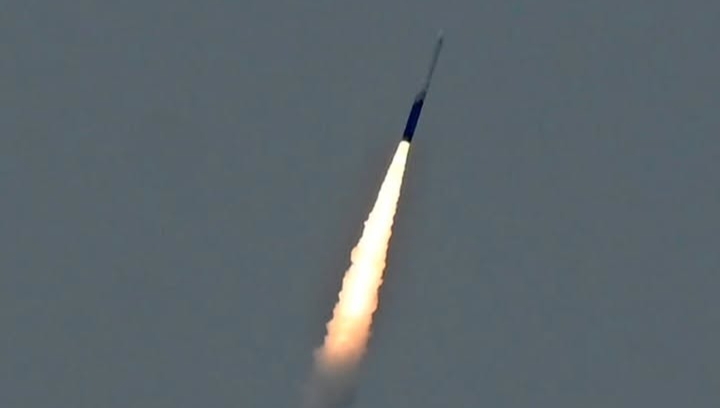
The Vikram-1 launch shows that Indian startups can now build advanced space technology capable of competing on the global stage. The mission demonstrates India’s increasing strength in innovation, engineering, and commercial space services.
What is Skyroot Aerospace?
Skyroot Aerospace is a Hyderabad-based private space technology company founded in 2018 by former ISRO scientists, including Pawan Kumar Chandana and Naga Bharath Daka. The company was created with a vision to make satellite launches more affordable, reliable, and accessible for customers around the world.
Since its beginning, Skyroot Aerospace has focused on developing modern launch vehicles using advanced manufacturing methods, lightweight materials, and 3D-printed rocket engines. The company first gained national attention after the successful launch of the Vikram-S suborbital rocket in 2022. Now, the successful Vikram-1 mission has taken the company to the next level.
Vikram-1 Rocket: A Major Achievement
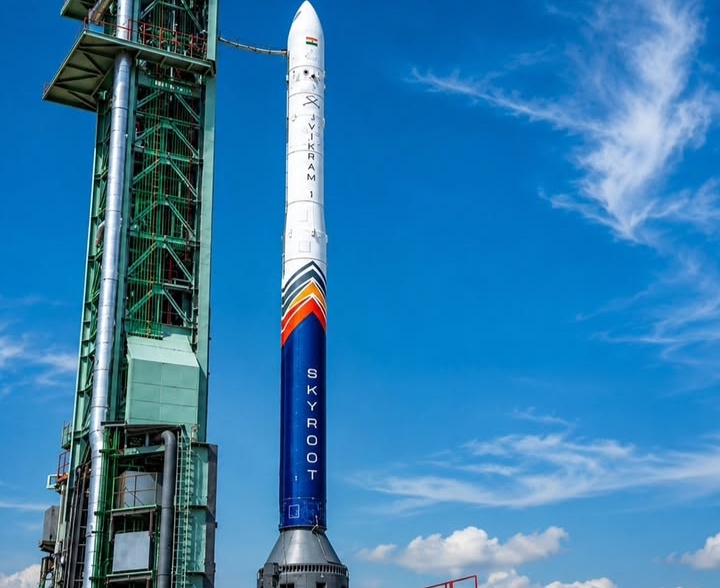
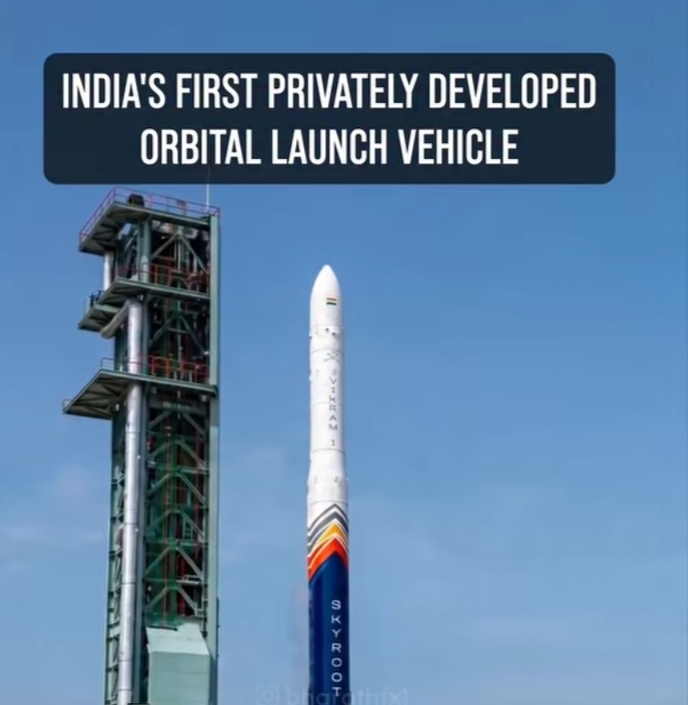
The Vikram-1 rocket is India’s first privately developed orbital launch vehicle. It stands around 22 meters tall and is designed to carry small satellites weighing up to 350 kilograms into Low Earth Orbit (LEO). The rocket uses advanced carbon-composite structures, modern avionics, and efficient propulsion systems to deliver satellites safely into orbit.
One of the most impressive features of Vikram-1 is its use of advanced manufacturing technologies, including 3D-printed engine components. These innovations reduce production time while improving efficiency and lowering costs.
The successful launch proved that the rocket’s propulsion, navigation, guidance, and control systems performed as expected during flight.
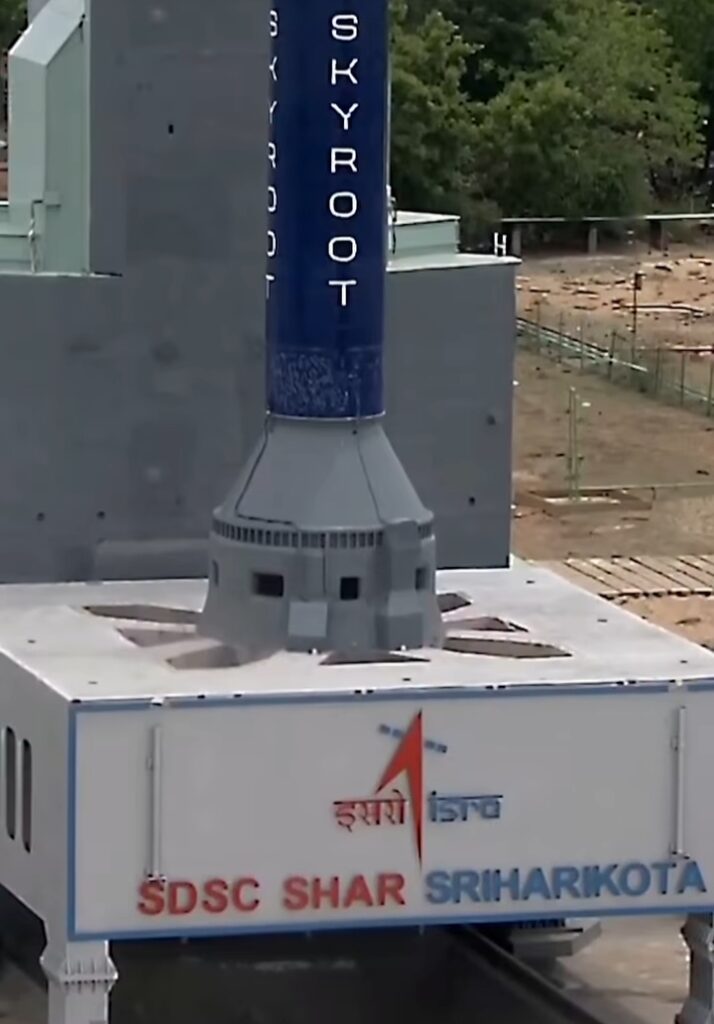
Mission Aagaman
The first flight of Vikram-1 was named Mission Aagaman, symbolizing the arrival of a new era in India’s commercial space industry. During the mission, the rocket successfully reached its planned orbit and carried multiple customer payloads and technology demonstration experiments.
The successful completion of Mission Aagaman gives confidence to satellite operators looking for affordable launch services from India. It also validates years of research, engineering, and testing by the Skyroot Aerospace team.
Pawan Kumar Chandana’s Vision
Skyroot Aerospace CEO Pawan Kumar Chandana has played a key role in building the company from a startup into one of India’s leading private space organizations. A former ISRO scientist, Chandana believed that private companies could contribute significantly to India’s space ambitions.
After the successful Vikram-1 launch, he announced that Skyroot plans to begin regular commercial launch missions and gradually increase production capacity. The company hopes to manufacture rockets more frequently to serve customers worldwide.
Why Vikram-1 Matters for India
The Vikram-1 launch represents much more than a successful rocket mission. It demonstrates that India’s private companies are now capable of designing, manufacturing, testing, and launching orbital-class rockets independently.
This achievement will encourage investment in India’s growing space startup ecosystem. It is expected to create new opportunities in aerospace engineering, satellite manufacturing, research, software development, and advanced manufacturing.
The success also supports India’s long-term goal of becoming one of the world’s leading commercial launch providers.
Growth of India’s Private Space Sector
In recent years, the Indian government has introduced reforms that allow private companies to participate more actively in space activities. Organizations like IN-SPACe have helped startups collaborate with ISRO while encouraging innovation.
As a result, India now has several fast-growing space startups developing launch vehicles, satellites, and space technologies. Skyroot Aerospace has emerged as one of the leaders in this new ecosystem.
The success of Vikram-1 proves that these reforms are producing real results and attracting global attention toward India’s commercial space capabilities.
Future Plans for Skyroot Aerospace
Following the success of Vikram-1, Skyroot Aerospace plans to focus on commercial satellite launches for domestic and international customers. The company aims to increase launch frequency while continuously improving rocket performance and manufacturing efficiency.
Future versions of the Vikram rocket family may carry larger payloads and support more complex space missions. Skyroot is also expected to invest in reusable technologies and next-generation launch systems that could reduce launch costs even further.
These developments will strengthen India’s position in the global space economy.
India’s Global Space Ambitions
India has already earned worldwide recognition through successful missions such as Chandrayaan and Aditya-L1. The addition of private launch providers like Skyroot Aerospace expands the country’s capabilities even further.
The global demand for launching small satellites continues to grow as communication, Earth observation, navigation, and scientific research become increasingly dependent on space technology.
With companies like Skyroot Aerospace entering the commercial market, India is well-positioned to capture a larger share of the international launch industry.
Conclusion
The successful launch of Skyroot Aerospace Vikram-1 is one of the most important milestones in India’s modern space journey. It demonstrates the power of innovation, entrepreneurship, and engineering excellence within the country’s private sector.
Led by Pawan Kumar Chandana, Skyroot Aerospace has shown that Indian startups can successfully build and launch orbital-class rockets capable of serving customers across the world.
As commercial launches become more frequent, Vikram-1 will be remembered as the mission that opened the door to a new era of private space exploration in India. The achievement inspires future engineers, scientists, entrepreneurs, and students while strengthening India’s reputation as a global leader in space technology.
Diamonds and ‘cab to orbit’: Rocket aiming to transform India’s space ambitions takes off
Derbyshire Constabulary Police Officer: Duties, Training, and Community Service