
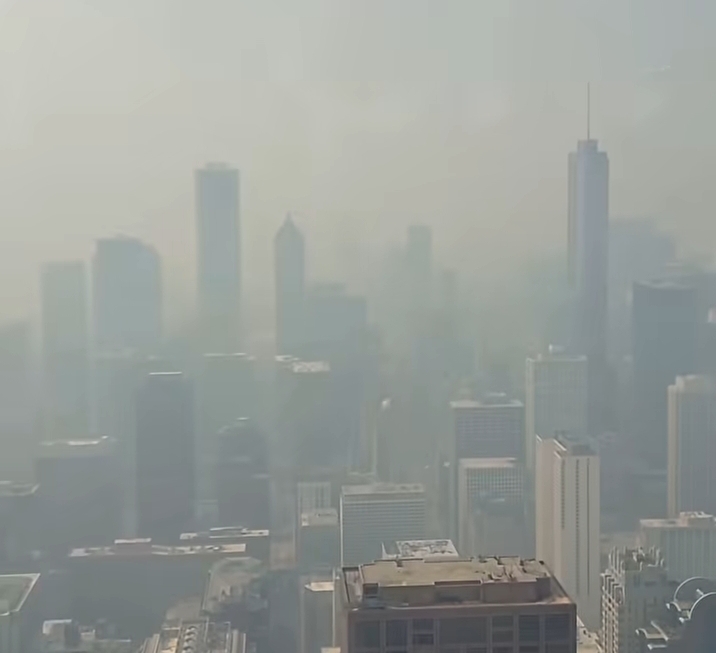
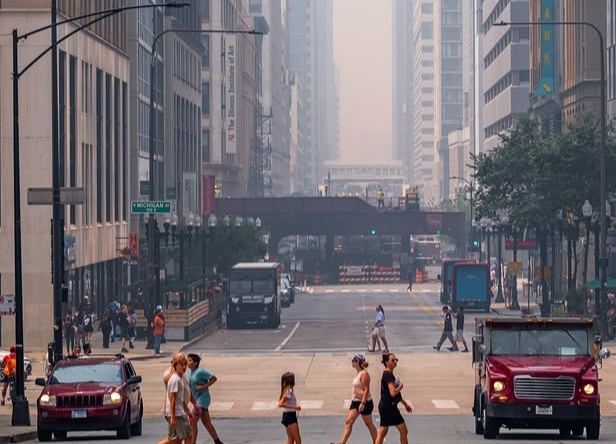
Air quality has become a major concern across the United States as smoke from Canadian wildfires spreads southward. Cities including Chicago, Detroit, Minneapolis, Milwaukee, Cleveland, and parts of New York have experienced hazy skies, reduced visibility, and unhealthy air quality levels.
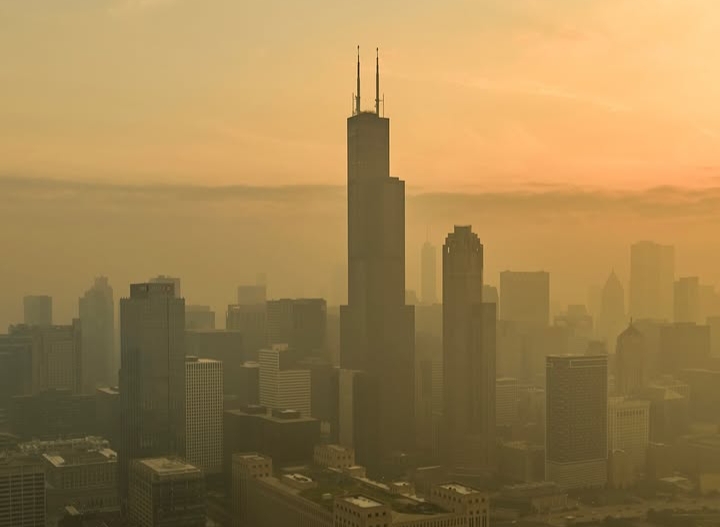
Many people are checking the Air Quality Index (AQI), looking at wildfire smoke maps, and wondering when the air quality will improve. In this article, we’ll explain why the air is smoky, how long it may last, and what you can do to protect yourself.
Why Is Chicago Air Quality So Bad Today?
The main reason for poor Chicago air quality is smoke drifting south from large wildfires burning across several Canadian provinces.
Strong upper-level winds have carried millions of tiny smoke particles hundreds of miles into the Midwest and Great Lakes region. Even though there are no major fires in Chicago itself, smoke from Canada can significantly reduce air quality.
The fine particles in wildfire smoke are known as PM2.5, which are small enough to enter the lungs and even the bloodstream. These particles are responsible for most health concerns during wildfire smoke events.
What Is the Air Quality Index (AQI)?
The Air Quality Index (AQI) measures how clean or polluted the air is.
AQI Categories
| AQI | Air Quality |
|---|---|
| 0-50 | Good |
| 51-100 | Moderate |
| 101-150 | Unhealthy for Sensitive Groups |
| 151-200 | Unhealthy |
| 201-300 | Very Unhealthy |
| 301+ | Hazardous |
When AQI rises above 150, everyone should consider limiting outdoor activity.
Canadian Wildfires Continue to Produce Smoke
Canada has experienced another active wildfire season, with fires burning across forested regions.
Smoke from these fires has traveled into:
- Illinois
- Wisconsin
- Michigan
- Minnesota
- Ohio
- Pennsylvania
- New York
- New Jersey
- Parts of New England
Weather systems continue moving smoke across different states depending on changing wind patterns.
Why Does It Smell Like Smoke Outside?
Many people ask:
- Why is it smoky outside?
- Why does it smell like smoke today?
- Where is the smoke coming from?
The answer is simple.
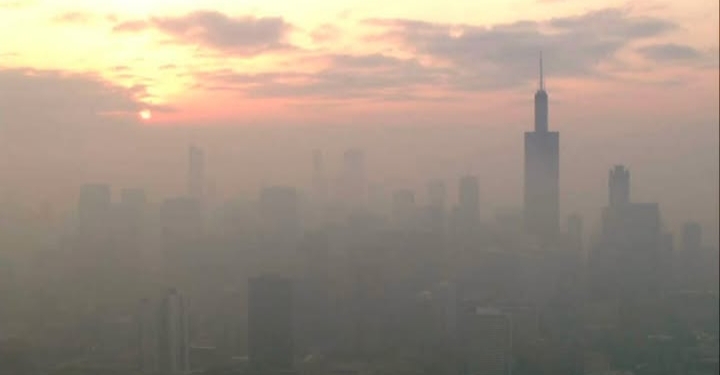
Wildfire smoke contains tiny particles, ash, and gases that travel long distances. Even if the sky appears only slightly hazy, enough smoke may still be present to create a burning smell.
When Will Chicago Air Quality Get Better?
This is currently one of the most searched questions.
The answer depends on changing weather conditions.
Air quality usually improves when:
- Wind direction changes
- Rain removes smoke particles
- Wildfire activity decreases
- High-pressure systems move away
Forecast models suggest that smoke levels often improve gradually as weather patterns shift, although conditions can change quickly.
Residents should continue checking daily air quality forecasts.
How Long Will Wildfire Smoke Last?
There is no single answer because wildfire smoke depends on:
- Active fires
- Wind speed
- Atmospheric pressure
- Temperature
- Rainfall
Some smoke events last only one day.
Others can continue for several days if winds keep carrying smoke into the same region.
Areas Seeing Poor Air Quality
Besides Chicago, many cities have reported elevated AQI.
These include:
- Detroit
- Minneapolis
- Milwaukee
- Madison
- Cleveland
- Pittsburgh
- Buffalo
- Rochester
- Philadelphia
- Boston
- New York City
Air quality may vary significantly even within the same state.
Air Quality Forecast
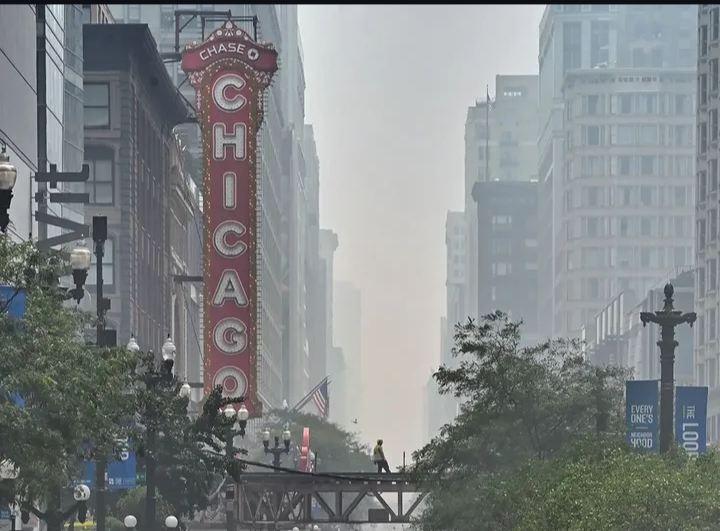
Weather agencies issue daily air quality forecasts that estimate pollution levels for the next 24 to 48 hours.
These forecasts consider:
- Wind direction
- Wildfire smoke movement
- Temperature
- Humidity
- Atmospheric mixing
Forecasts help residents decide whether outdoor activities are safe.
Air Quality Tomorrow
Many people search for tomorrow’s forecast before making plans.
Although smoke may decrease in some locations, changing winds can also bring new smoke into nearby areas.
Checking updated forecasts every morning is recommended during wildfire season.
Should You Wear an N95 Mask?
Health experts recommend wearing a properly fitted N95 mask if outdoor exposure is unavoidable during periods of unhealthy air.
N95 masks can help filter many fine smoke particles.
Cloth masks and surgical masks are much less effective against PM2.5 wildfire smoke.
Can an Air Purifier Help?
Yes.
A quality air purifier equipped with a HEPA filter can significantly reduce indoor smoke particles.
For best results:
- Keep windows closed
- Run the purifier continuously
- Replace filters when recommended
- Seal obvious air leaks around windows and doors
Many families use air purifiers during wildfire smoke events to improve indoor air quality.
Who Should Be Most Careful?
Poor air quality affects everyone, but certain groups face greater health risks.
These include:
- Children
- Older adults
- Pregnant women
- People with asthma
- Individuals with COPD
- People with heart disease
These groups should reduce outdoor exposure whenever AQI reaches unhealthy levels.
Symptoms of Wildfire Smoke Exposure
Common symptoms include:
- Coughing
- Sore throat
- Burning eyes
- Runny nose
- Headache
- Chest discomfort
- Difficulty breathing
Anyone experiencing severe breathing problems should seek medical attention promptly.
Tips to Stay Safe During Poor Air Quality
Here are several practical ways to protect yourself:
- Stay indoors when AQI is high.
- Keep windows and doors closed.
- Use air conditioning on recirculation mode.
- Wear an N95 mask if you must go outside.
- Avoid outdoor exercise.
- Drink plenty of water.
- Use a HEPA air purifier indoors.
- Monitor local air quality updates throughout the day.
Why Is the Sky So Hazy?
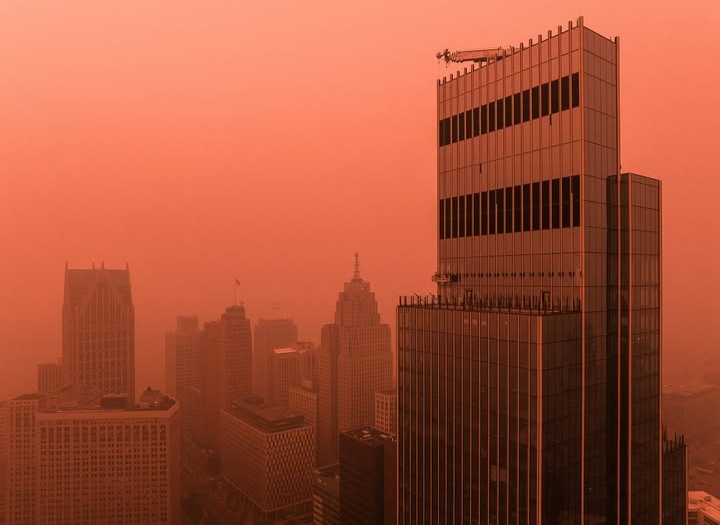
Smoke particles scatter sunlight, creating a gray or orange haze.
Depending on the amount of smoke in the atmosphere, sunsets may appear unusually red or orange.
Reduced visibility is also common during heavy smoke events.
Are Canadian Wildfires Becoming More Common?
Scientists say warmer temperatures, prolonged dry conditions, and changing climate patterns have increased wildfire risks in many regions of Canada.
Large forests combined with hot, dry weather can allow fires to spread rapidly, producing smoke that travels across North America.
Final Thoughts
The recent decline in Chicago air quality is largely the result of wildfire smoke drifting south from Canada. Similar conditions have affected many cities across the Midwest, Great Lakes, and Northeast.
Although smoke levels may improve as weather patterns shift, conditions can change from day to day. Staying informed through local air quality forecasts and taking simple precautions—such as limiting outdoor activity, using an air purifier, and wearing an N95 mask when necessary—can help reduce health risks.
As long as Canadian wildfires remain active, occasional smoke events may continue to affect air quality across parts of the United States.
Chicago’s air quality the worst in the world as Canadian wildfire smoke blankets area
Hal Williams: Sanford and Son Star Whose Work Will Always Be Remembered