
The Wisconsin governor race in 2026 is shaping up to be one of the most closely watched political contests in the United States. With Democratic Governor Tony Evers unable to seek another term, the race is an open-seat contest that could change the political direction of Wisconsin. The general election is scheduled for November 3, 2026, following the state’s partisan primary on August 11.
Wisconsin is already known as one of America’s most competitive political states. Presidential elections have repeatedly been decided by narrow margins, and control of state government has also been closely contested. That makes the 2026 governor election important not only for Wisconsin voters but also for national political observers.
The 2026 Wisconsin Governor Race
Governor Tony Evers, a Democrat who has served since 2019, is leaving office after reaching the state’s constitutional limit of two consecutive terms. His departure created an open field for candidates from both major parties.
The Republican side has selected U.S. Representative Tom Tiffany as its nominee. Tiffany represents Wisconsin’s 7th Congressional District and entered the governor’s race with strong conservative credentials. Republican voters also had Andy Manske on the August primary ballot.
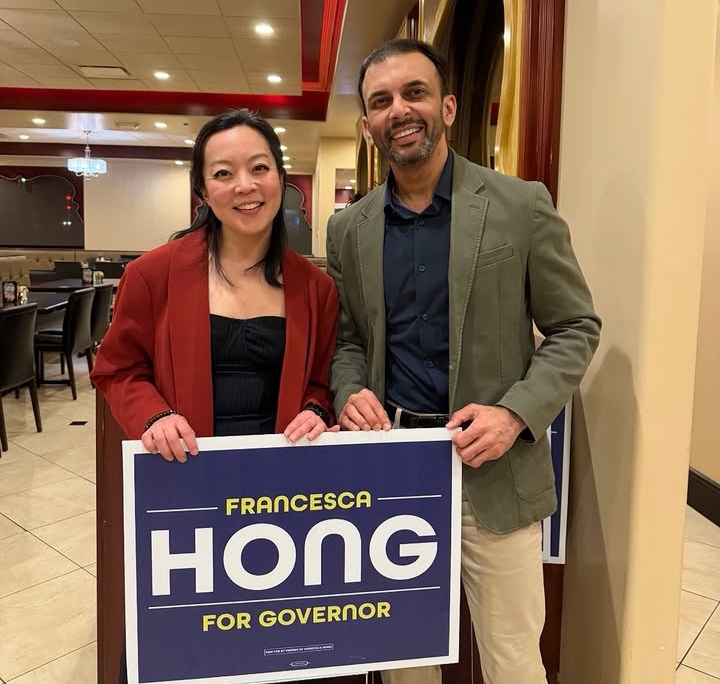
The Democratic contest was considerably more competitive. Several prominent Democrats initially entered the race, creating a crowded primary field. Among the candidates were Milwaukee County Executive David Crowley, state Representative Francesca Hong, former Lieutenant Governor Mandela Barnes, state Senator Kelda Roys, Joel Brennan, Missy Hughes and Lieutenant Governor Sara Rodriguez. Some candidates later withdrew, changing the shape of the contest before primary day.
By the final stage of the Democratic primary, the contest had developed into a particularly important battle between Crowley and Hong. Recent reporting described the race as extremely competitive, with Hong representing the progressive wing of the Democratic Party and Crowley presenting himself as a more establishment-backed candidate.
Francesca Hong and David Crowley
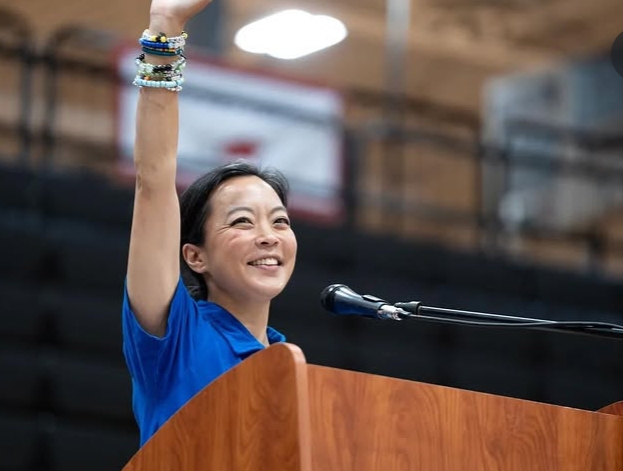
Francesca Hong has attracted national attention because of her progressive political message and grassroots campaign. She is a state lawmaker and has emphasized policies involving childcare, healthcare, education and economic issues.
Hong has also criticized the expansion of large data centers in Wisconsin, making technology infrastructure and its environmental and economic impact part of the campaign conversation. Her candidacy has been viewed as part of a broader effort by progressive Democrats to challenge the traditional party establishment.
David Crowley represents a different approach. As Milwaukee County executive, he has emphasized government experience and the ability to compete effectively in a general election. He received support from outgoing Governor Tony Evers after entering the race. Crowley would also make history as Wisconsin’s first Black governor if elected.
The contrast between the two candidates reflects a larger question for Wisconsin Democrats: should the party focus on a more progressive agenda that energizes its base, or choose a candidate who emphasizes broader general-election appeal?
Tom Tiffany and the Republican Campaign
Tom Tiffany enters the general election as the Republican nominee after winning the GOP primary. His political profile is firmly conservative, and he has been closely associated with the Republican Party’s national direction.
His campaign will likely focus on issues such as taxes, government spending, public safety, education, regulation and the role of government. Republican voters will also be looking at Wisconsin’s economy and cost-of-living pressures as they prepare for the November election.
Because the governor’s office is currently held by a Democrat, Republicans have an opportunity to argue that voters should change the state’s direction. Democrats, meanwhile, will likely emphasize continuity with Evers’ administration and warn voters about a major shift in state policy.
Why Wisconsin Matters
Wisconsin is often described as a political battleground for a reason. Elections can be extremely competitive, and small changes in turnout can have a major impact on the final result.
The governor has significant authority over the state’s executive branch. The office influences the state budget, executive agencies, appointments, education policy, economic development and other major areas of government.
The 2026 race could therefore affect Wisconsin for years beyond the election itself.
There is another important reason this election matters: the balance of power in Madison. A governor works with the state legislature, and the relationship between the executive and legislative branches can determine how easily major policies move forward.
That means voters will not simply be choosing between two personalities. They will also be choosing between different political visions for the state.
Major Issues to Watch
The cost of living is expected to be an important issue during the campaign. Wisconsin voters, like voters across the country, are paying close attention to housing costs, healthcare expenses, wages, taxes and everyday household prices.
Education will also remain a major topic. Public schools, funding, teacher recruitment and higher education are issues that affect communities throughout Wisconsin.
Childcare is another issue that has received significant attention from Democratic candidates. Supporters argue that affordable childcare can help working families and strengthen the state’s workforce.
Economic development is likely to be another major debate. Wisconsin wants to attract businesses and investment while also managing infrastructure demands and concerns about environmental impacts.
The growth of artificial intelligence and large data centers has added a newer dimension to the economic conversation. Candidates have different views about how Wisconsin should balance technological investment with energy use, environmental concerns and local community interests.
Public safety and crime are also likely to feature prominently, particularly in Republican messaging.
The November Election
Wisconsin’s general election will take place on November 3, 2026. The winner will succeed Tony Evers and begin a new four-year term.
The November contest is expected to attract significant attention because Wisconsin is a competitive state. Both parties have strong reasons to invest heavily in organizing, advertising and voter turnout.
For Democrats, the challenge will be maintaining the coalition that has helped the party compete statewide while also appealing to independent and moderate voters.
For Republicans, the opportunity is to capitalize on the open seat and present their candidate as the choice for voters seeking a change in direction.
The outcome could depend on turnout in Milwaukee and Madison, performance in the state’s suburbs, and support across smaller cities and rural communities. Wisconsin’s political geography makes statewide campaigns especially complicated because candidates must build support across very different regions.
What Voters Should Watch
As the general election campaign develops, voters should pay attention not only to campaign advertisements but also to the candidates’ detailed policy proposals.
Questions about taxes, education, healthcare, childcare, housing, jobs, public safety and state spending could become central to the campaign.
Voters may also want to examine how each candidate’s proposals would actually be implemented. Campaign promises can sound simple, but the governor must work with the legislature, state agencies and local governments to turn those promises into policy.
Debates will also provide an opportunity to compare the candidates directly. Their responses on the economy, education, government spending and other major issues could influence undecided voters.
A Race With National Attention
Although the Wisconsin governor election is a state contest, national political organizations are likely to watch it closely.
Wisconsin has repeatedly demonstrated that statewide elections can become competitive and unpredictable. A close governor’s race could attract millions of dollars in outside spending, national media coverage and extensive grassroots organizing.
The result could also provide an early indication of the political mood heading toward the 2028 presidential cycle.
Still, the election ultimately concerns Wisconsin voters and the future of their state government.
Final Thoughts
The Wisconsin governor race 2026 is more than a contest to replace Tony Evers. It is a choice between competing visions for the state’s future.
Tom Tiffany will represent Republicans in November, while Democrats will have their nominee following the August 11 primary. The Democratic contest highlighted a major debate within the party between progressive priorities and a more establishment-oriented approach.
With the general election set for November 3, Wisconsin voters will have several months to examine the candidates, their records and their plans.
The race is likely to remain highly competitive, and the final result could have important consequences for taxes, education, economic policy, healthcare, public safety and the balance of political power in Wisconsin.
For anyone following American politics in 2026, Wisconsin will be one of the states worth watching closely as November approaches.